Athlete, Coach Laura Wilkinson Athlete, Coach Laura Wilkinson

108. Rising Above with Olympic Gold Medal Volleyball Player Jon Root

This week, Laura introduces us to the remarkable Jon Root, a volleyball luminary whose journey to success defied expectations at every turn. From an unforeseen introduction to volleyball in West Los Angeles to clinching prestigious All-American accolades at Stanford University to achieving Olympic and international glory, Jon's trajectory epitomizes the indomitable spirit of passion and perseverance in the sporting realm. Through Laura's engaging dialogue with Jon, listeners are immersed not only in Jon’s many spectacular achievements but also in the intricacies of athletes' transitions beyond the competitive sphere, delving into themes of identity, purpose, and personal growth post-athletics.

From his storied collegiate career at Stanford University, where he navigated the rigorous demands of both academics and athletics with aplomb, to his triumphant representation of the United States on the international volleyball stage, Jon's journey is a testament to unwavering determination and dedication. As he candidly shares his experiences, Jon unveils the myriad challenges athletes encounter upon bidding farewell to professional sports, emphasizing the paramount importance of self-discovery, resilience, and adaptability in charting a course through the uncharted waters of post-athletic life. Through their illuminating discourse, Laura and Jon offer invaluable insights and inspiration, urging athletes, coaches, and sports enthusiasts to embrace change, forge supportive networks, and leave an enduring legacy that transcends the boundaries of the sporting arena. This episode stands as yet another poignant reminder of the transformative power of sports, guiding listeners on a journey of empowerment and self-discovery as they endeavor to realize their fullest potential, both on and off the field.

Episode Highlights:

  • Jon's unexpected journey from baseball to volleyball

  • The challenges of California's volleyball scene

  • Jon’s Stanford University choice

  • His reflections on his Stanford Athletics Hall of Fame induction

  • The intense training leading to the 1988 Seoul Olympics

  • Winning a gold medal and post-competition challenges

  • Jon's personal transformation

  • Coaching impact, personal growth, seeking support, and leaving a lasting legacy

Quotes:

"Sports kind of saved me from myself."

"I was a good mess, but I was kind of a mess."

"There's more to this than just the bread and butter."

"You're allowed to have your own journey, and that's what makes it beautiful."

"I think I was just so lost in the humility and the kind of what just happened."

"If you're good at performance but you're not great at change, can you look at change in a different way? In changing, we do perform. In performing, we do change. It's inherently part of the walnut."

"You're going to have to get out there and try a couple of things. The first thing may not be the only thing, and it may not be the best thing."

"We need to let athletes know that we are more than just athletes. There's so much more involved in our stories and in who we are as people."

Links:

Laura’s Social Media:


Read More
Coach, Expert, Mindset Laura Wilkinson Coach, Expert, Mindset Laura Wilkinson

106. Navigating Life After Sport with Athlete Transition Coach Robyn Eckersley

In yet another impactful and empowering episode of The Pursuit of Gold podcast, Laura delves into the all too often-overlooked topic of life after competitive sports. Joining her for this important discussion is Robyn Eckersley, CPC, ELI-MP, a dedicated life expansion coach who specializes in helping high performing women create huge, meaningful change within themselves, their personal lives, and their professional lives. Together, this dynamic duo navigates the emotional rollercoaster of retiring from elite athletics, discussing the challenges of finding purpose and passion beyond sports. 

Throughout their candid conversation, Laura and Robyn uncover practical strategies for tackling financial challenges, prioritizing mental health, and embracing gratitude as a pathway to personal fulfillment. Exploring the journey of transitioning from the pinnacle of athletic achievement to a new chapter in life, they emphasize the importance of setting meaningful targets, reframing mindset, and finding strength in community support networks. Through the insights that Robyn and Laura share here today, they redefine success on individual terms, encouraging listeners to approach change with confidence and optimism as they embark on life beyond the sports arena.

Episode Highlights:

  • The emotional journey of transitioning from athletic achievement to new beginnings

  • Strategies for discovering passions and purpose beyond sports

  • The importance of mental health awareness and seeking support during transitions

  • Navigating financial challenges and planning for long-term stability post-retirement

  • Finding strength through gratitude and guided journaling practices

  • Overcoming isolation and reconnecting with community and purpose

  • Self-discovery and personal growth after leaving the sports arena

  • Embracing change and finding fulfillment beyond athletics

Quotes:

"There are too many stories of unsuccessful retirement experiences where athletes suffer immensely with mental, emotional, physical, and financial repercussions once they hang up their jersey."

"What is life about? I had no answers. And so, honestly, my mental health did start to take a major toll."

"A lot of these athletes, if they had the privilege of generating a good amount of income over the course of their career, are without financial advising and the appropriate kind of financial counseling to help set them up for the long term."

"I think it's really healthy to go through those emotional ups and downs afterward. That's a healthy grief process."

"A lot of times people think I'm grieving... I grieve the routine I had training every day in the gym."

"We're not created to be alone. We need community for sure."

"We need to recognize all the value that we have intrinsically as each individual human being on top of what you can do in your sport."

"Lean into the fact that you get to experience the Olympic village, the camaraderie, and the opportunity to connect with fellow athletes on a human level."

"Struggling after retirement shouldn't be the norm; we're changing those metrics and creating a supportive community for athletes."

Links:

Laura’s Social Media:

Connect with Robyn:

Read More
Coach, Expert Laura Wilkinson Coach, Expert Laura Wilkinson

99. Battling Counterfeit Comforts with Author, Expert and Coach Robia Scott

In the latest episode of the Pursuit of Gold podcast, actress, author, emotional coach, and Hollywood professional dancer turned iconic musician Prince’s muse, Robia Scott, takes center stage. Her riveting and candid conversation with Laura here today delves into her storied career, the highs and lows of the entertainment industry, and the sacrifices and life-altering choices made by high achievers in pursuit of their dreams. Beneath all the glitz and glamor, they uncover the emotional and mental struggles that often accompany success, particularly the damaging relationship between body image, food, and self-worth. 

Throughout the episode, Laura and Robia explore the complex world of emotional eating and its roots in societal pressures and personal insecurities as Robia shares her two-decade-long journey to recognize and address these underlying emotional wounds. Together, they stress the critical significance of seeking help, mentorship, and guidance while underscoring the role of accountability and the power of vulnerability in the healing process. Advocating for self-awareness through journaling and investing in personal growth, this episode is a profound journey into emotional healing and self-discovery, providing valuable guidance for those seeking happiness and fulfillment amid the demands of high achievement and success. Don't miss this opportunity to join Laura and Robia’s insightful conversation today so you, too, can continue on your own path to emotional well-being and self-empowerment. 

Episode Highlights:

  • Robia Scott's remarkable journey from professional dancer to Prince's muse

  • The sacrifices made in the pursuit of dreams

  • The hidden struggles behind the glamour of a successful career

  • Body image, food, and self-esteem

  • Robia's journey of self-discovery and emotional healing

  • The significance of acknowledging and processing emotions

  • Robia's role as a coach

  • The cycle of emotional eating and its roots in societal pressures 

  • The importance of recognizing the underlying emotions driving destructive behaviors

Quotes:

"In many of our sports, there's this elephant in the room that people don't want to talk about because we're high achievers, we're tough, we think we should be impenetrable, like some kind of superhero."

"These escapes might offer temporary relief and comfort, but they can easily become addictive, enslaving, and destructive patterns."

"The feelings we're not dealing with are dealing with us."

"Awareness is the first step of change. You can't change what you don't know."

"If I'm overweight, you just, like, go on a diet. You try to white knuckle things. You try to quit the smoking. You try to stop the addiction. You try to stop drinking the alcohol. But if you don't deal with the root, it just parlays into a different addiction." 

"I call them counterfeit comforts because they're those comforts that we turn to, that they're an imposter, they give us some temporary satisfaction, some temporary relief, but they're really a counterfeit."

"You don't have to be controlled by these…counterfeit comforts. You can overcome that and move past it."

"It's important because like you said, we all struggle with it in some ways, so we have to talk about it."

Links:

Laura’s Social Media:

Connect with Robia:

Read More
Female Athlete, Coach, Mindset Laura Wilkinson Female Athlete, Coach, Mindset Laura Wilkinson

86. Mastering Visualization: 8 Common Mistakes Athletes Must Avoid

Laura goes solo here today to unravel the intricacies of visualization, an indispensable mental tool that underpins athletic success. With her trademark eloquence and expertise, she dissects the eight common missteps athletes often make when navigating the realm of visualization, emphasizing its paramount role in achieving sports-related aspirations. Laura transcends the conventional wisdom that physical prowess alone suffices, acknowledging the array of challenges athletes face, from injuries to burnout, mental roadblocks, and performance anxiety. 

As the episode unfolds, visualization is heralded as a transformative skill that can reshape  athletes’ journeys, and with our host’s seasoned guidance and personal anecdotes, listeners gain the tools needed to unlock their full potential, not only in sports but also in life beyond the arena. She reminds us all that excellence doesn't solely hinge on physical exertion but also on cultivating a resilient and strategic mindset. Join Laura here today as she unveils the secrets to successful visualization, affirming that the pursuit of gold demands not only physical dedication but also the bolstering of mental fortitude—a journey well worth embarking upon.

More key components for this journey can be found in Laura’s transformative program, Confident Competitor, which is designed to empower athletes to enhance their mental game, improve performance, and rise to challenges. Be sure to check out this comprehensive online program which offers 19 lessons on mindset, mental game, and performance skills, alongside practical activities, bonuses, and group coaching to equip athletes with the tools for success. 

Episode Highlights:

  • Visualization takes practice

  • Start small, grow big

  • Sitting up matters

  • Eyes closed, mind open

  • Modeling vs. visualization

  • Diverse approaches to visualization

  • Consistency is key

Quotes:

"Just like physical training, mental training like visualization also takes practice and time."

"Start small and you can always grow bigger."

"It's actually much more functional and effective if you are sitting up and thinking through the process."

"When you close your eyes, it helps you see the images in your mind clearer instead of having your eyes open and distracted."

"With consistency, with consistent practice, you will get better at visualization also."

"This is a mindset skill you are growing. Build that consistency and it will become easier for you."

"When you can also take time to just visualize in your head alone without the action, you're actively kind of rewiring your brain in ways you might not be able to yet with the actions attached to it."

"You have to have patience with yourself. It takes practice. Mental training, real quality mental training, takes practice."

Links:

Confident Competitor

Laura’s Social Media:

Laura’s Instagram

Laura’s Facebook

Read More
Coach, Mindset Laura Wilkinson Coach, Mindset Laura Wilkinson

72. Enjoy the Journey with Olympic Diving Coach Kenny Armstrong

On this episode of the Pursuit of Gold, Laura welcomes her diving coach of thirty years, Kenny Armstrong, to the podcast.  Not only is he a two time Olympic diver, but he’s also a coach turned father figure who helps aspiring divers get Division One scholarships and even gold medals.  The pair dive into Armstrong’s origin story as well as his ‘out of the box’ training style, and why it works. As a young boy, Kenny began his diving career rather uniquely: diving into  a pond.  A decade and a half later, he would find himself at the 1972 Olympics, diving in front of a large audience for the first time.  It wasn’t until the University of Calgary, however, that he got his start coaching.  

Since then, his career earned Kenny a legacy defined by consistency, adaptability, culture, and fun.  Like Laura says at the onset of the episode, “A good coach can change the game.  A great coach can change your life,”  and for so many athletes, Kenny has done just that.  Today, he talks about why he loves it all so much, what it is about the sport that gets him excited,  and why the athletes’ success is far more important than his own.  Reminiscing on ‘offbeat’ diving retreats during which he lost half of his squad, his team’s special comradery, moments of victory with Laura, and practicing sports psychology, he notes that the journey always supersedes the destination to him.  He and Laura strongly hold the belief that the two minutes of victory on the podium are too fleeting to hold onto; it’s the moments in between that really matter.  So listen to this special conversation to hear about the legend that is Kenny Armstrong and his unique and highly successful career.  

The Finer Details of this Episode: 

  • Armstrong’s first dives into a pond

  • The ‘72 Olympic Games

  • Reckoning with his international status

  • Getting his coaching start at the University of Calgary

  • Creating culture

  • Why consistency wins

  • Knowing your people and letting them know you

  • Winning gold together 

  • Why the journey > the destination

  • The freedom of diving

  • Father figure and mentor


Quotes: 

“A good coach can change the game.  A great coach can change your life. I feel like that describes Kenny in a nutshell.”

“These athletes would want us to continue, which was probably true. I mean, if they had a vote… we'd have been probably still going.”

“Well, I finally found out that I could be competitive on an international level. I did pretty well in Nationals and in the Olympic trials.  Finally, I think the year of 1980, I beat Greg in his home pool.”

“Everybody says we have to separate politics and sports, but it's impossible. You can't do it.”

“You have to have a culture. Like it's one thing for me to tell somebody how to win a gold medal. It's another thing if they get to train with somebody that is doing that.”

“People seem to say about all the greats from different sports that these coaches knew each one of their athletes so well individually, how to push their buttons, or how to back off– and they had to back off.” 

“This whole culmination of your life has to be about more than two minutes standing on the podium.”

“So don't lose the fun in sport. That's what brings kids, and when they get too serious about it, that takes the fun away. So you've got to be obviously serious, or you're not going to make it, but you have to also be very careful with that.”

Links:

Grab the Black Friday Catalog!

Laura’s Social Media:

Laura’s Instagram

Laura’s Facebook

Woodlands Diving

Read More
Coach, Mindset Laura Wilkinson Coach, Mindset Laura Wilkinson

71. How to be Champion Minded with Allistair McCaw

In this week’s episode, Laura welcomes Allistair McCaw, a best-selling author and speaker who is recognized as one of the world's foremost figures in leadership, team culture, and mindset. Throughout his 30-year-long career, Allistair has worked with some of the most successful athletes and organizations in the world, from Olympians and Paralympians to World Champion Athletes and Grand Slam Champions. He’s also a 29-time marathon finisher and a former five-time world championship competitor in the sport of triathlon. Today, Allistair is committed to his lifelong purpose of teaching, inspiring, and motivating others to be champion minded and achieve their full potential.

In this episode of the Pursuit of Gold podcast, Laura and Allistair dive deep into the growth mindset of professional athletes. Allistair begins by discussing the biggest struggles that athletes face today and explains the key difference between choice and sacrifice. As he nicely puts it, when you’re passionate about something, it’s not a sacrifice; it’s a choice. Then, Allistair goes on to explain the importance of learning to deal with failure and overcoming perfectionism as an athlete. Being a perfectionist won’t get you far in sports, but embracing failure will. Next, Laura and Allistair talk about the power of vision, the importance of developing self-leadership, and the differences between excellence and success. If you want to learn more about being champion minded, make sure you tune into this episode to hear what Allistair has to say.

Episode Highlights:

  • Allistair’s background

  • The biggest struggles that athletes face today

  • Choice vs. sacrifice

  • Embracing failure and overcoming perfectionism

  • The inspiration behind Champion Minded

  • The importance of vision for professional athletes

  • The differences between team sports and individual sports

  • The importance of developing leadership skills

  • Why authenticity is key for coaches

  • Excellence vs. success

  • The power of the growth mindset

Quotes: 

“We all know that progress is different for every single athlete. Sometimes you'll have spurts of growth, sometimes, you'll have spurts of confidence, which helps, and so on and so forth. But we're all on a different journey. ”

“Nobody can make you hungry. No one can give you a passion. No one can tell you to enjoy it more. That really comes from within.”

“You're not always going to feel like a million dollars. You're not always going to jump out of bed in the morning and can't wait to go to practice. It's impossible, no matter how dedicated or passionate you are. So for me, it was that vision or that purpose of wanting to be a champion one day, wanting to be the best I could be - that's what got me through those tougher days. ”

“It has to come from within. You can't make somebody passionate. You can't make somebody do something that they don't necessarily want to do.”

“You can't lead others if you're not leading yourself effectively.”

“I believe that great coaches, great leaders are more about excellence than about success.”

“Enjoy it; that's the most important thing. And I know that's very hard when you're in the middle of it, and especially when things aren't going well, but the journey is the most important thing about it.”

“All the hard work, no matter what level you get to, no matter what your destiny is, it will never go unused; it will always be worthwhile because these are qualities that you learn in sports that will help you afterward in your relationships and in business and corporate, whatever direction you go into.”


Links:

Grab the Black Friday Catalog!

Laura’s Social Media:

Laura’s Instagram

Laura’s Facebook

Connect with Allistair:

Allistair McCaw Website

Allistair McCaw’s Books

Allistair McCaw’s Instagram

Allistair McCaw’s LinkedIn

Read More
Female Athlete, Coach Laura Wilkinson Female Athlete, Coach Laura Wilkinson

60. It's Only Gymnastics with Olympic Gold Medalist Coach Cecile Landi

You may know today’s guest, Cecile Landi, as Simone Biles’ coach or for coaching multiple gymnasts to Olympic medals, World Championship titles, and numerous full-ride scholarships to D1 schools. What you might not know is that Cecile was an Olympian herself; she claims to have been a late-bloomer, but once she made the French Senior National Gymnastics team at fifteen, there was no stopping her. Cecile competed at three European Championships, three World Championships, and the 1996 Olympic Games. She’s always up for a challenge and constantly wants to be pushed to the next level in everything she does, yet manages to maintain her calm throughout it all. Today, she walks us through her journey from gymnast to coach and how she and her husband Laurent make an unstoppable coaching duo. She also discusses the difficult time during the Tokyo Olympics last summer and the beautiful silver lining that came from it.

Cecile starts the episode with her story of growing up in gymnastics, telling her parents at age seven that she wanted to be an Olympian, and getting invited to the National Team Training Center at age nine. She discusses her transition from not being the hardest worker to deciding she wanted to be pushed to be better and how that let her break through to the Senior National Gymnastics Team. Cecile then gives an insight into her competitive experience, describing her favorite memories of going to her first World Championships and to the 1996 Olympics in Atlanta, before moving on to describe how she decided to continue with gymnastics at the club level following her Olympics experience. She follows that up with the story of how she got into coaching and moved to the US, how she and Laurent balance their professional partnership and their marriage, and their journey to coaching at the elite level, a journey that brought them an amazing opportunity. Cecile and Laurent were on a break from coaching and in the process of buying their own gym when they got a remarkable offer—to coach record-breaking gymnast Simone Biles at the 2021 Tokyo Olympics. Cecile discusses how the couple couldn’t turn down the opportunity, how she coped with the pressure of training a superstar, and the impact of the pandemic on their preparations. She also goes into detail about what happened when Simone began experiencing the twisties, including how they dealt with the fallout and put together a beam routine that would win Simone and Team USA a bronze medal. And finally, Cecile discusses her latest success, winning level ten in Texas, and gives her trademark advice to other coaches—be there for your athletes and remember that it’s only gymnastics and the sun will rise tomorrow.


Episode Highlights:

  • Cecile’s experience growing up in gymnastics
       

  • Breaking through to the national team
       

  • Cecile’s most memorable experiences at the national level
       

  • Going to the ’96 Olympics
       

  • Choosing to continue in the club world
       

  • Becoming a coach
       

  • Moving to the US with Laurent
       

  • Coaching at the World Olympic Gymnastics Academy
       

  • How Cecile and Laurent work together and maintain their marriage
       

  • Stepping up to coaching elite athletes
       

  • Taking a break in 2017
       

  • Getting the call from Simone Biles
       

  • Coaching Simone and coping with pressure
       

  • The impact of the pandemic on training
       

  • What happened at the Tokyo Games
       

  • Dealing with the fallout of Simone’s decision
       

  • Figuring out the medal-winning beam routine
       

  • Winning level ten in Texas
       

  • Cecile’s advice for other coaches


Quotes:

“I started when I was five. And it was just one club in my city of 40,000 people. And I just started because my sister started. She’s three years older than me. And by the age of nine, doing some little competition, I ended up being invited to the national team training center.”

“I didn’t feel pushed. And I wanted to feel it. So we had a couple of Chinese coaches that were there. And they had the best kids. And I wanted my chance to be there. And most of the people there were like, 'I don’t think you’re going to survive. I don’t think you’re strong enough to do it.' And actually, it helps me. When someone tells me I can’t do it, I’m going to prove to you that I can.”

“When I was younger, I wanted to be a nurse like my mom. And then she told me really early on, 'Don’t do it, it’s too hard, you don’t make money, you work too much.' And I look at her now and say, 'Look what I do. I work way too much. I don’t make a lot of money. And I’m not a nurse.'”

“I have a lot more respect for my coaches and anyone who coaches because it does not get any easier as the years go on. It’s just, it’s a hard job. It’s a hard job. Sometimes, a lot of people think it’s a hobby. It’s more than that. It has to be more than that.”

“Year by year, we just kept working. Kept working with the girls, and they were just learning so fast. And they followed our leads and the process and trusted that we had the best interest for them. And it just worked out.”

“We went back to Dallas, and we looked at each other, we’re like, man, we can’t pass this opportunity. We can always open a gym later. But working with the most talented athlete I’ve ever seen in my life, it’s not going to happen again.”

“The pressure for us was toward her, we didn’t want to disappoint her. We wanted to make sure she got the chance that she deserved. And other than that, I didn’t really care what anyone else was saying. You’re not in my shoes, and I do know that I’m doing the best that I can to help her. And as long as she knows that, then the rest doesn’t matter.”

“The pandemic had been such a mental struggle for everybody, but nobody wanted to talk about it. And I think she was the one who said, ‘Hey, I’m not okay. And it’s okay to not be okay. And I’m struggling.’”

“We started training, and something was said by our national team staff that she took wrong. And her demeanor changed. And I saw that pressure on her shoulders even showing up more, and she was not practicing as well. And that’s when she started having her first case of the twisties on the floor.”

“She looked at me, she looked really good. I was pretty confident that, you know, she was okay. But she said as soon as she stepped into the arena and the lights, something just clicked, and she just lost her confidence in everything, and she started panicking, but didn’t want to say anything, so went for the vault.”

“She said, ‘Those girls, they need a medal, they deserve a medal, and they will get a medal without me. If I compete, we’re done.’”

“In a sport like gymnastics where, like you said, you’re landing on a hard surface, and if you don’t know right side up from upside down, and you land on your head, you break your neck, like this could be it, you know, like, like life-altering, ending.”

“Understanding what she couldn’t do in that moment, to say she couldn’t compete, I feel like was a very impressive thing to do. I’m actually really, really impressed by that choice that she made. I think that was really smart. But it had to be excruciatingly hard.”

“When she hit that dismount, that was just, the relief, like, she did it, she’s safe, she competed the way she wanted to compete. She proved to herself that she could do it, and it’s going to help her on the healing process. For me, that was what was important. It was, I know if she can do this, it’s going to help her.”

“Time will tell what she decides to do. We told her, if you come back again, it has to be for you. Can’t be for us, can’t be for anyone else but yourself. And we’ll be here if you want us to be.”

“Even if it’s an individual sport, they’ve noticed that they only get better if the team is better. And so that’s why, really, we want them to understand, the stronger your team is, the stronger you’re going to be.”

“At the end of the day, you are here for the athletes. They’re not here for you. You’re here for them. It’s your job to figure out how you can help them become their best. And the sun will rise tomorrow. It’s only gymnastics. It’s going to be okay if today is not perfect.”


Pursuit of Gold Podcast is brought to you by Kaatsu Global.


Links:

The Confidence Journal

Life at 10 Meters: Lessons from an Olympic Champion

Laura Wilkinson Designs- Shop


Connect with Laura:

Laura’s Instagram

Laura’s Facebook


Connect with Cecile:

Cecile's Instagram

Cecile's Twitter

Read More
Coach Laura Wilkinson Coach Laura Wilkinson

58. Define Your Role in the World with DEFINE Founder & CEO Hank Richardson

On today’s episode, Laura’s guest is her dear friend and forever teammate, Hank Richardson. Hank earned a full scholarship for diving to the University of Florida, where he went on to become a ten-time All-American, a US national champion, and a national team member for USA diving. Hank retired from diving when he graduated from college, but some of his old injuries continued to plague him long after he left the pool, the pain becoming so severe that it started to impact his ability to enjoy work. At the urging of a friend, Hank tried a Pilates/yoga/ballet hybrid class and found himself at the beginning of something special: not only did he start managing his pain and experiencing relief, but it led to him teaching classes, opening new studios, and going back to school to get a Master’s in business. His senior project in his MBA program became the foundation on which his health and well-being studio, DEFINE, was created. DEFINE has now expanded throughout Houston, the US, and across the globe, but pain management and physical fitness are only part of Hank’s passion. He is also a well-being and positive psychology expert, and today, he and Laura discuss positive ways to reframe your thinking and how positive psychology can help and impact athletes on their journey to greatness.

First, Hank gives us the lowdown on his remarkable journey, from learning to dive at Camp Longhorn to becoming a champion diver, and giving up diving because of a back injury, before sharing how he transitioned from teaching to fitness instruction to business school. Then he tells the story of surviving month-to-month when launching DEFINE and how he expanded the business into a global franchise, including how he survived COVID by pivoting into online services. Next, Hank talks about his decision to go back to school to get his Master’s degree in applied positive psychology and how it has influenced his worldview and business, with DEFINE shifting into a well-being hub with a mission to enrich its members’ lives. He also has some advice on how to incorporate positive psychology into your everyday life and how it can help athletes develop resiliency and focus on strengths rather than weaknesses, as well as how meditation and mindfulness can work in partnership to improve self-awareness and enable positivity. Laura then asks Hank about his partnership with Education Based Housing, a nonprofit working with cost-burdened households to provide access to quality housing, and Hank discusses his passion for creating circles of well-being within communities and how DEFINE will offer well-being services through this partnership. And finally, Hank offers his thoughts on what has made DEFINE so successful, pointing to its mission to offer a service that truly helps its communities, and gives some advice to current athletes and coaches, emphasizing the importance of focusing on personal strengths and creatively applying them in challenging situations.

Hank’s story of determination, resiliency, and willingness to keep learning and developing will captivate and inspire athletes and non-athletes alike to focus on their strengths, keep a positive outlook, and never give up on their dreams.


Episode Highlights:

  • How Hank got into diving with lessons at Camp Longhorn    
       

  • Transitioning from school athlete to college athlete    
       

  • Hank’s back injury and how diving both caused it and kept it in check    
       

  • Moving on from diving to teaching sixth graders in the South Bronx
       

  • How Hank followed his passion for movement and interest in health into teaching yoga and Pilates
       

  • Going back to business school and figuring out his dream of opening his     own studio
       

  • Launching DEFINE and expanding into a franchise    
       

  • Dealing with the impact of COVID by pivoting to online   
       

  • Hank’s Master’s in applied positive psychology and how it transformed DEFINE into a well-being hub    
       

  • Hank’s advice on incorporating positive psychology in your life    
       

  • What Hank would change if he could go back in time with the knowledge he has now    
       

  • The importance of resiliency when a setback occurs    
       

  • Hank’s opinion on the benefits of mindfulness and meditation
       

  • DEFINE’s partnership with Education Based Housing, a nonprofit working with     cost-burdened households to provide access to quality housing    
       

  • What Hank believes has made DEFINE successful    
       

  • Hank’s advice for current athletes and coaches


Quotes:

“Diving, it truly was a way of utilizing movement as a self-expression. And you know, the many lessons that all of us learned in diving, the overcoming fears, the setting goals and accomplishing them, the concept of resiliency, even during injuries, etc. It’s such a powerful, powerful sport.”

“Being a student athlete, you are literally performing a job in some ways. You are studying for school, you’re going to school, you’re training first thing in the morning, you’re training in the evening, you’re eating, I mean, it’s very regimented. Right. And I know for a fact, it made me a much stronger, better person. But I remember that first year being like, oh my gosh, I don’t know if I can continue doing this.”

“The good thing about the mindset that, really, work being physically hard created is that when we got to the end of the year, I actually really knew I deserved it. I was like, I’ve worked so hard, I deserve to do well at this NCAA championship. And so that worked, but at the same time, by the end of the year, I was a little burnt out physically, mentally, emotionally.”

“It’s called spondylolisthesis. And you know, it’s manageable. A lot of people have to have fusions done. But that’s really how I started getting into the next phase of my life, which was really getting into yoga and Pilates to help to prevent to have to have the fusion.”

“When I started thinking about the classes and the things that I really, really loved, it was centered around psychology, it was centered around education, it was around mindset. And so I applied for this program called Teach for America. And they placed me to teach sixth-graders in the South Bronx, and it was truly a life-transforming experience.”

“I give all the respect in the world to schoolteachers. Any school has its challenges, any grade level has its challenges. And so working with the various teachers that were in our public school setting just gave me the most utmost respect for what school teachers do on a daily basis.”

“I never really thought of myself as being, like, a fitness instructor as my goal in all of this, but I loved working with clients, I loved working with people. And that has been kind of the consistent theme for me throughout. And when you believe in a product or a service so much because of its own transformative benefits that you’ve received, it’s impossible to not want to share that, truly.”

“My professor, within that same timeframe, said something that changed my life. He said, ‘You know what? Don’t take a job just because it’s available.’ He said, ‘Do something that will define your role in this world.’ And I, literally, the light bulb went off, the chills in my body. And I’ll be honest, because it’s a process of overcoming fear in many ways, just like diving, that I was like, I don’t know if I’m going to open up a studio, but if I do, I know I’m going to name it ‘Define.’”

“There are also a lot of negatives, challenges, that can also happen because of the franchise model. And a lot of it is because the mindset of a franchisee is that they own a business, whereas really, they’re just licensing the name and the services of the business.”

“Once COVID hit, it was a survival mindset and a little bit of a free-for-all. And truly, people felt like they had to do whatever they needed to do to make sure that they survived, and we really responded quickly by pivoting. Within just a few days, our entire business shifted online, we started Zoom classes, we had an on-demand platform.”

“The concept is that if we’re just focusing on our weaknesses, well, that’s how we’re going to feel when we’re living our lives. Versus if we can put our energy and focus on our strengths, then it’s going to have that ability for us to find more of a state of flow, more of a state of ease and also be able to be more proficient.”

“It’s not simply about just being focused on the good, right? It’s also coming up with a plan for when things don’t go the way you expected, how to kind of overcome that.”

“What I ultimately realized is that what meditation is doing is it’s training us simply to become more aware. More aware of our internal dialogue, more aware of the stories we tell about other people or ourselves, more aware of truly how we feel being around certain people, or how we feel about, you know, certain activities that we do.”

“I love the analogy for meditation where it’s like, you know, you can go a couple of days without showering and not a lot of people notice, but after a while, you know, people are gonna notice, right? And I feel the same way about my meditation. Like, I can go a couple days, and it’s not a big deal. But if I go for more than three, four, or five days, my attitude’s a little stinky.”

“One of my huge passions is about supporting and providing and helping to create circles of, you know, well-being if you will, and support. I feel like the studio business, it caters to a very specific demographic, and that demographic is people who can afford to come and take those types of services. And there’s so much that could be done and said in our world that could help various people.”

“Walking into the store of DEFINE, it needs to be an experience, and that experience should be, you know, welcoming, it should be truly nurturing in many ways, but at the same time pushing you and challenging you enough to get something out of it. So I think people come to us for that reason.”

“It’s important that we focus on strengths. And as a mentor or as an athlete, it’s important for us to help discover that strength, whether it’s a parent role, or a mentor role, or a coaching role, helping to really look at the strength of the individual.”

“Instead of using some of their weaknesses, which is very common in a challenging situation, we can now train ourselves to look at our strengths and use creative ways of applying that to our lives.”


Pursuit of Gold Podcast is brought to you by Kaatsu Global.


Links:

The Confidence Journal

Life at 10 Meters: Lessons from an Olympic Champion

Laura’s Social Media:

Laura’s Instagram

Laura’s Facebook

Hank’s Links:

DEFINE homepage

DEFINELIFE homepage

Hank’s Instagram

Read More
Coach Laura Wilkinson Coach Laura Wilkinson

55. Creating Opportunity with 8 time Olympic Medalist Coach Jane Figueiredo

On today’s episode, Jane Figueiredo joins Laura Wilkinson to discuss her long standing career as a one-time Olympian and diving coach for the British and Russian Olympic teams and the University of Houston. Among her many accomplishments, Jane was named the NCAA Diving Coach of the Year four times and has coached a number of international divers, including multiple divers, including Tom Daley, to Olympic medals.

She opens the episode by recounting how she made the leap from her home in Zimbabwe to Houston, as well as her experience of becoming a diving Olympian for team Portugal before becoming a coach.  Jane goes on to discuss her coaching career, attributing much of her success in this field to being in the right place at the right time. She also highlights what she learned by working with the Russian Olympic Diving Team, and also by working with Tom Daley. Taking a note from Laura’s book, Jane notes that she has started valuing the importance of mental preparedness more, and encouraging her athletes to focus less on medals, and more on striving to be the best they can. This fascinating interview draws to close with Jane sharing her plans for the future. 

Episode Highlights: 

  • Growing up in Zimbabwe

  • Coaching at University of Houston 

  • Olympian for one year on Portugal’s team

  • International presence

  • The importance of being in the right place at the right time

  • Figueiredo’s time working as a coach for the Russian team

  • Lessons learned from team Russia 

  • Presently coaching British team

  • Tom Daley and his strong work ethic and need for planning

  • How Tom made her a better listener

  • Tom’s lack of success in Rio

  • Confidence going into Tokyo

  • The importance of mental preparedness 

  • Focus on being the best you can be; not gold medals  

  • Jane plans to return to London to prepare for Paris Olympics


Quotes:
 

“Obviously, I was born and raised in Southern Africa. And we had, believe it or not, a deep history of diving. Most of the divers that ever came out of Zimbabwe, all dove in the States on scholarship.”

“There is certainly an extra drive, because you’ve got to understand, a lot of them… they live with their parents for many years into their adult life. So they don't have the same opportunities that American kids have. So yes, the drive is certainly there to try to better themselves in a different way.”

“My technical knowledge exploded because once I started coaching Vera Ilyina I understood they coached me on twisting technique. Because I would ask a lot of questions.”

“In the US, we never had trials, and nobody used dry land, whereas in the Russian system, it was 80% dry land. And that's where they develop their divers, in dry land. And then the other 20% was, ‘Okay, let's have a look in the pool.’”

“Tom called me and said, ‘Hey Jane, I want to come over and chat with you. Can I come train with you?’ I said, “Sure, you can come.” And– I thought he was coming in two weeks. He said, ‘I'll be there tomorrow morning.’”

“I'm pretty satisfied with my career and the college thing had gone really, really well, and I was okay. I was happy with myself, and then he came along, and I was just like, ‘Oh, my God, this is just, Oh, my God, he's got me.’”

“I'm happy to admit that as an elite coach, we become quite controlling, because we want to try to control all of it. Sure. We want to try to control the mindset, the physicality, the emotion, the private, because all of it contributes to whether you're successful or not. And then I had to really just let some of it go.”

“We talked too much about winning the gold medal, and I think that puts so much pressure and expectation on you. And that when you don't deliver, it's like you go below the surface. It's like the iceberg below the water. And so we decided, I don't want to hear a word about it.  Don't let me hear you, in any interview, talk about a gold medal. I don't want to hear about it. Do not say a single word.”

“Life does not go exactly to schedule. So you know, maybe the event gets postponed, maybe you're up there getting ready to do front, four and a half. And they blow the whistle just as you're running because something's fallen in the pool. I said, ‘Tom, I'm going to schedule this out. But the only thing that I want you to always remember is that things can change.’”


Links:

Life at 10 Meters: Lessons from an Olympic Champion

Laura Wilkinson Designs- Shop

Buy Laura a Coffee

Laura's Social Media:

Laura's Instagram

Laura's Facebook


Jane's Social Media:

Jane's Instagram


Read More
Athlete, Coach Laura Wilkinson Athlete, Coach Laura Wilkinson

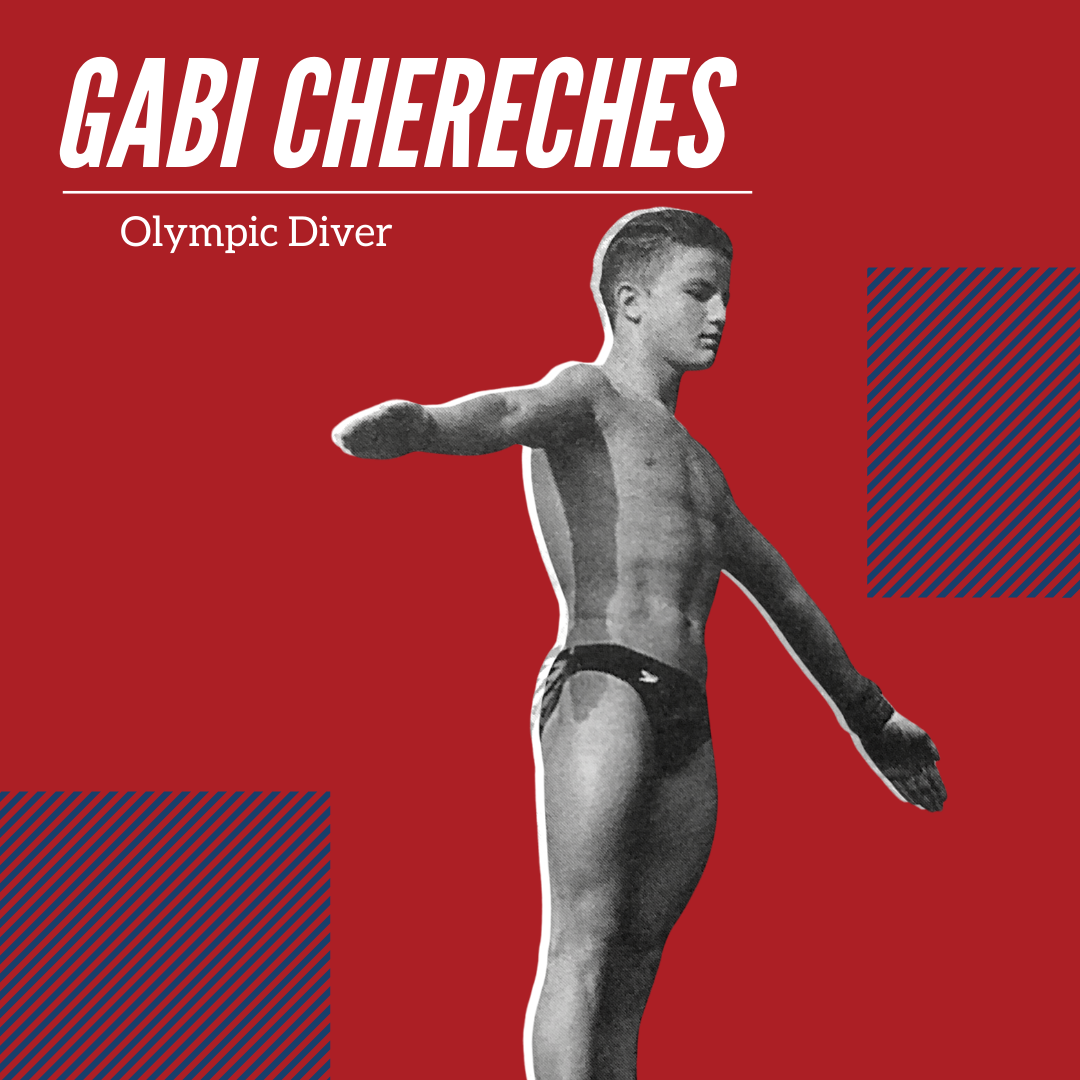
31. When the Journey Brings You Full Circle with Olympic Diver and Coach Gabi Chereches

Laura’s longtime friend, Gabi Chereches, joins her for a very special episode this week. Currently a coach at The Woodlands Diving Academy, where he and Laura first met almost 30 years ago, Gabi’s many diving accomplishments include 3 Olympic Games, and 9 NCAA All-American honors. As a coach, he has guided athletes to both Junior and Senior titles and at numerous World Championships, and he was named the 2014 USA Diving Developmental Coach of the Year. Gabi has led an incredible life and he shares his fascinating story with Laura and all of you here today.

Their conversation tracks Gabi’s life and career from his days growing up in Romania through his remarkably successful diving career and up to the current day where he is proving equally successful as a diving coach. In the process, Gabi shares such details as what his life was like during Romania’s revolution, experiencing great success at an early age, his life changing interview at the Barcelona Games, and his move to live in the USA. Learning to speak English, his differing Olympics experiences, his college years, and how he handles tough or disappointing moments in his life are also discussed. Gabi draws the episode to a close by describing the weirdest time in his life, his coaching career and coming full circle in his life, what success means to him now, and by offering some parting advice for athletes and coaches. Laura and Gabi’s close friendship is fully evident in this heartfelt conversation today, as Gabi reviews his remarkable life, the lessons he has learned throughout, and the wisdom he has to offer us all regarding what is truly important in the arenas of both sports and life.


Episode Highlights:

·       Gabi’s start in diving

·       Growing up in Romania during the revolution

·       Enjoying so much success at such a young age

·       The impact of his NBC interview at the Barcelona Olympics

·       His move to the USA and his American family

·       How Gabi learned to speak English

·       His differing Olympic experiences

·       His college experience

·       Gabi’s third Olympics Games

·       Handling disappointment

·       The weirdest time of his life

·       His start and progression as a coach

·       Coming full circle

·       Gabi’s current definition of success

·       His parting words of wisdom


GabiChereches-1.png

Quotes:

“I still remember my first jump off the 10 meter…it was scary.”

“Diving is a very scary sport sometimes…if you have that ‘no fear’ it helps a lot.”

“I actually appreciate that I went through that because…now that you reflect back, it makes you a better person.”

“When you have a team like that, it becomes your family.”

“It was such a unique experience…it was awesome…I got spoiled pretty quickly.”

“I was watching ‘Beavis and Butthead’.”

“All you guys were pretty tough on me.”

“We’ll call you out when you’re being a punk, you know, but we’re going to love you no matter what you do, for sure.”

“Going into Atlanta, it felt more like home.”

“Going to Tennessee, it was a no-brainer.”

GabiChereches_2.png

“Unfortunately, I just did not have a great performance in the 2000 Olympic Games.”

“It’s not just one meet – it’s the journey.”

“We’re just going to keep pulling you back in, too.”

“This is how I’m going to give back.”

“If you guide them through that process, then their journey becomes a little bit better, a little bit more family-type feeling for them.”

“You have to figure it out, how to make them feel ready and right in their mind to approach certain skills and certain dives.”

“I’m very lucky that I’m able to experience this.”

“It’s been a cool ride so far.”

“Let’s learn from each other.”


Links:

5 Smart Strategies to Confidence:   https://www.laurawilkinson.com/learn 

Laura’s Social Media:

Instagram:   https://www.instagram.com/lala_the_diver  

Facebook:   https://www.facebook.com/TheLauraWilkinson 

Learn more about Gabi:

Woodlands Diving Team: Woodlandsdiving.org


Read More
Coach Laura Wilkinson Coach Laura Wilkinson

10. The secret formula for 20 years of impact with coach Chip Baker

Chip Baker is a fourth generation educator who has been a teacher/coach for 20 years, is the creator of  ‘Chip Baker – The Success Chronicles’ and the ‘Chip Baker Character Development Program’, and is a best selling author. His motto is ‘Live. Learn. Serve. Inspire. Go get it.’, and he brings this motivating statement to life in his conversation with Laura today.

Beginning with a look at his own background and the powerful model his family provided for him in terms of service to others, Chip then relates his experiences as he entered the coaching field and the level of mentorship which these positions offered him. He shares the changes he has witnessed as a teacher/coach over the years, explores the qualities that make up a good coach, and reviews his transition from coaching to producing ‘The Success Chronicles’. With great passion and humor he shares some of his formulas for helping people achieve success, his own definition of success, what it takes to become an effective leader, and how to handle times of doubt. Chip’s remarkable warmth, wisdom, and humility shine through in this informative, entertaining and inspiring conversation.

Episode Highlights:

  • Chip’s background and the example of service that his family provided him

  • Chip’s early years with coaching

  • The mentorship side of coaching

  • The changes and the constants he has seen over the years

  • What makes a quality coach

  • Transitioning from coaching to producing ‘The Success Chronicles’

  • Chip’s formulas for helping people to be successful

  • His definition of success

  • Becoming an effective leader

  • Handling times of doubt

Quotes:

“I have stories upon stories upon the…positive difference that my family members made in the lives of others.”

“If you are open-minded and you work hard and you treat people right…I believe that great things will happen for you.”

“Input equals output.”

“In any situation that we’re placed in, every choice we make either, you know, pushes us forward, or holds us back.”

“I love that it all started with you wanting to give back, wanting to give service.”

“Formulas are the way to help us get through things.”

“Show up…have a great attitude…give your all.”

“It’s not about me.”

Links:

Laura’s Social Media:

Instagram: https://www.instagram.com/lala_the_diver

Facebook: https://www.facebook.com/TheLauraWilkinson

Connect with Chip:

YouTube Channel:   https://www.youtube.com/c/ChipBakerTheSuccessChronicles/featured

Online Store:   https://chip-baker-the-success-chronicles.square.site/

Facebook: https://www.facebook.com/chipbakertsc

Instagram: https://www.instagram.com/chipbakertsc/

Twitter: https://twitter.com/chipbaker19

Read More
Female Athlete, Athlete, Coach Laura Wilkinson Female Athlete, Athlete, Coach Laura Wilkinson

5. From World Champion Gymnast to World Renowned Coach with Kim Zmeskal

This week, Laura is extremely excited (and geeking out a little bit) as she welcomes one of her childhood heroes, Kim Zmeskal. to the podcast. Kim is a National Champion, World Champion, Olympic Bronze Medalist, and the first American to win the All-Around World Championship title in gymnastics. Currently, she co-owns Texas Dreams Gymnastics with her husband Chris Burdette in Coppell, Texas, and coaches there as well.

Today, Laura talks to Kim about her illustrious career in gymnastics, including the 1991 World Championships, as well as the times that she retired and then returned to the sport. They also delve into her transition into coaching, what she has learned through it, how her coaching style compares to the coaches she had, and her opinion on the top qualities for being a coach. Kim also offers some valuable advice for recognizing and acting upon abuse. As you listen, you will soon discover that Kim has a great deal of wisdom to share not only about gymnastics, but about life as well, proving that she truly deserves the heroic status which Laura has bestowed upon her. 

Episode Highlights:

  • Kim’s gymnastic career and her reflections upon it

  • 1991 World Championships

  • The times that Kim retired from and returned to gymnastics

  • Her transition to coaching and what she has learned from it

  • Comparing how she coaches to how she was coached

  • Kim’s opinion on the most important qualities in a coach

  • Her advice regarding recognizing and acting upon abuse

Quotes:

“You’re living through history, and sometimes living through history is not always comfortable.”

“Define before you go into something what is going to make you happy with it.”

The Pursuit of Gold Podcast Promo (23).png

“It’s okay to grieve a broken or lost dream, but you can’t stay there.”

“How do I help convince them that they have the tools to do it, is really more what it is.”

“This is both ways, we’re all learning through this.”

“Keep encouraging openness.”

“We are all evolving humans, and I think if we can be there for each other, and own things, that we can do better and be there to inspire people.”

Links:

The Pursuit of Gold homepage:   http://thepursuitofgold.com/

 Kim’s Twitter:   https://twitter.com/KimZmeskal

 Kim’s Instagram: https://www.instagram.com/kimzb/ 

Texas Dreams homepage:   http://texasdreams.com/


Read More